Student Projects
In Summer 2026 three incredible undergraduate interns completed research on topics that include one or more of the metrics from this dashboard. Explore this page to learn more about how our interns used Central Valley data from the dashboard and met with local experts to tell powerful research stories about Fresno and the Central Valley.
Meet Oliver Lopez!
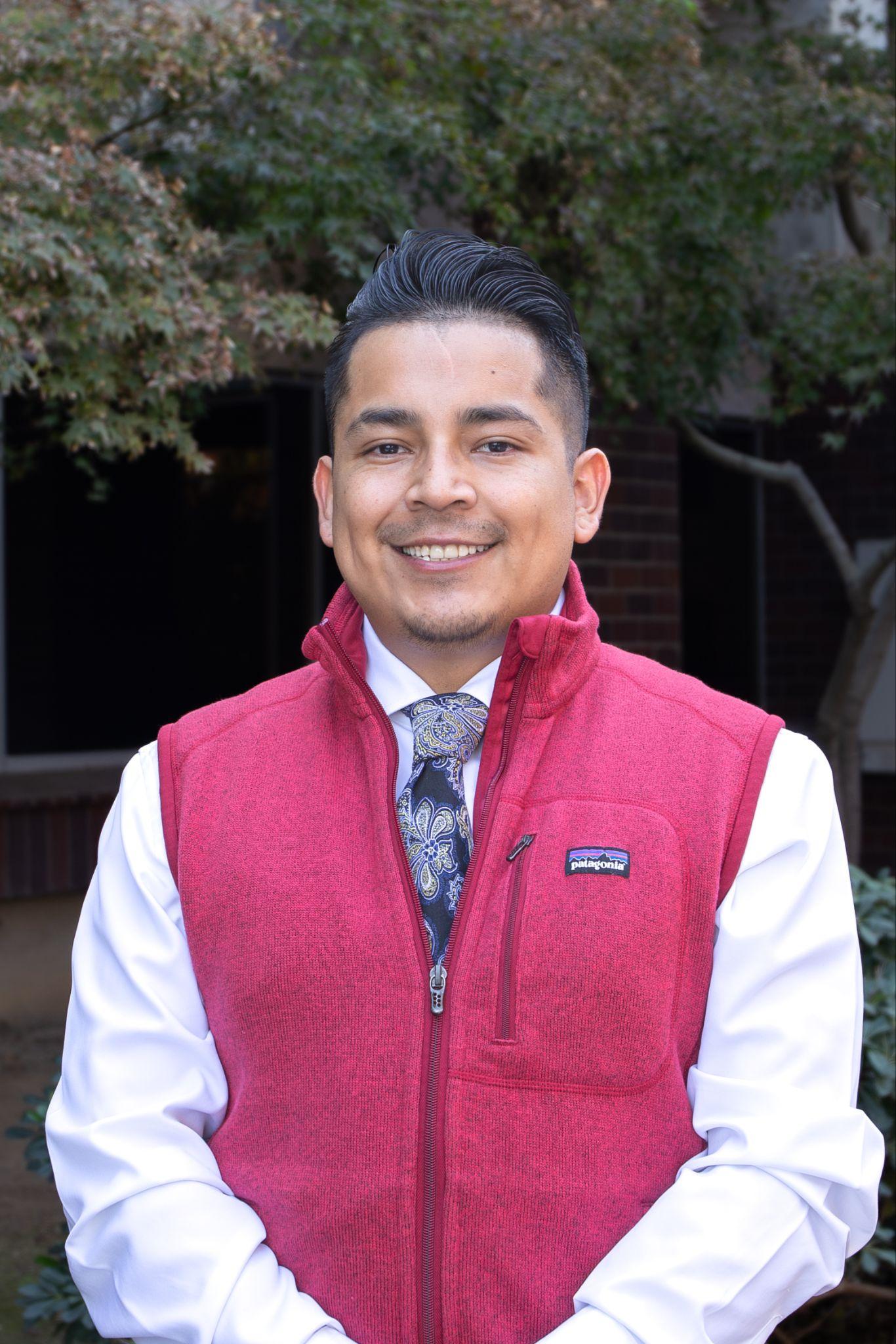
Oliver Lopez is a Finance major with a minor in Economics at California State University, Fresno, and expects to graduate in December 2026. His professional interests include portfolio management with a focus on value and core-focused strategies, as well as equity research and trading. Having grown up in the Central Valley, Oliver is drawn to studying the region’s challenges because he wants to understand where the community stands today and how conditions can be improved.
Read his policy brief
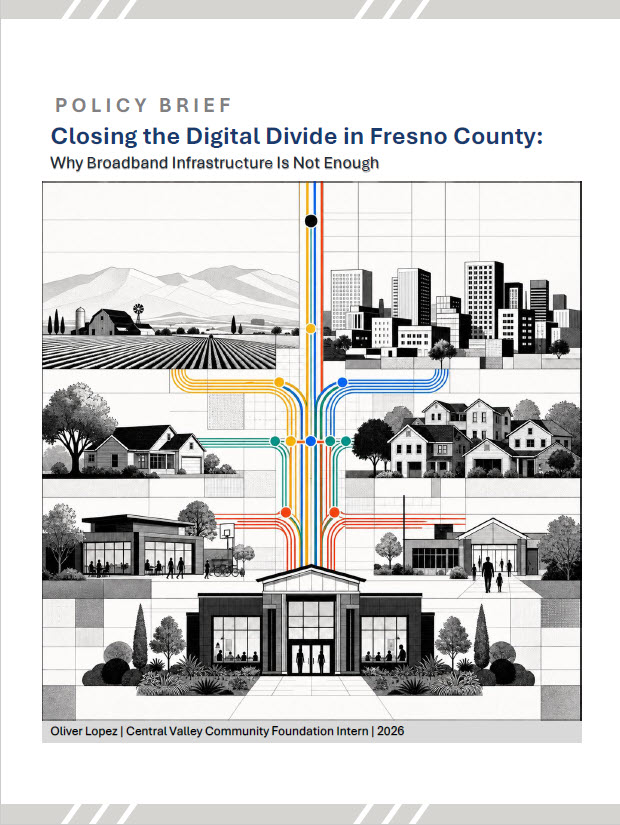
This social policy brief examines the digital divide in Fresno County and why broadband infrastructure alone hasn’t closed it. Using indicators from the Fresno Mobility Metrics Dashboard on home broadband subscriptions and device access, the project draws on a review of national and regional research alongside case studies of local broadband initiatives. The findings show that only 65.6% of Fresno County households have both a home broadband subscription and a computer or tablet, compared with 75.2% statewide, a gap that widens further for Hispanic households, at 59.8% versus 70.3% for White, non-Hispanic households. These findings matter because reliable, affordable, effectively-used internet access is increasingly essential for education, employment, healthcare, and civic participation. The brief argues that closing Fresno’s digital divide requires a coordinated strategy pairing infrastructure investment with affordability support, device access, digital literacy training, and trusted local partners.
View his presentation
Oliver’s nine-slide deck, Closing Fresno County’s Digital Divide, distills the brief into its key numbers: the 9.6-point gap between Fresno County and California, the 10.5-point gap between Hispanic and White, non-Hispanic households, the tract-level variation that countywide averages hide, and the coordinated strategy he proposes beyond infrastructure alone.
Meet Daniela Romo!

Daniela Romo is a Business Administration student with an option in Accounting and a minor in Economics at Fresno State and expects to graduate in May 2027. Her research interests include housing stability, mental health, social determinants of health, and the economic barriers that influence upward mobility for children and families. Drawing from her experiences as a student and parent, she is interested in understanding how housing affordability and economic conditions affect families’ ability to achieve long-term stability. She is particularly drawn to research on the Central Valley because of her connection to the region and her interest in understanding and addressing the challenges experienced by local families.
Read her research report
This descriptive mixed-methods analysis examines how housing instability and interconnected economic and mental health barriers affect families and children in Fresno, Madera, and Merced Counties. Using Fresno Mobility Metrics Dashboard indicators for household income, housing affordability, student homelessness, living-wage employment, and transportation costs, the project combines descriptive county comparisons with a narrative literature review and interviews with local practitioners. Findings suggest that housing instability is rarely caused by one barrier alone; limited affordable housing, inadequate income, transportation expenses, mental health challenges, and difficulty accessing or sustaining supportive resources can reinforce one another. Practitioner interviews described how unstable housing can affect children’s mental health, attendance, behavior, and academic engagement. The findings support coordinated, preventive approaches that address housing, mental health, education, and family economic stability together.
View her presentation
Daniela’s sixteen-slide deck, Housing Stability as a Social Determinant of Health, lays out her core claim that housing instability is a chain of reinforcing barriers rather than a single one, traces the pathway from income and wages through housing affordability and stability to mental health and education, and compares Fresno, Madera, and Merced Counties on each link in that chain.
Meet Jeffrey Pan!

Jeffrey is a Business Economics student at UCSD and expected to graduate in 2027. His research interests include sustainability, upward mobility, and public policy. Jeffrey is drawn to this area because of their strong practical applications towards social welfare and benefit. He is particularly interested in research about the Central Valley because it is the agricultural backbone of California.
Read his research paper
These statistical analyses examine income, employment, and correlated metrics in the Central Valley, and, more broadly, California. Combining the Fresno Mobility Metrics Data Dashboard and the adjacent Urban Institute National datasets on Upward Mobility, the project incorporates multiple regression and Local Moran’s I analyses to reveal trends and statistical inconsistencies between counties. The findings show that capital has been rotating out of the Bay Area counties traditionally known for tech (e.g., San Francisco) and that the Central Valley tends to underperform compared to California in the included upward mobility metrics. These findings are crucial to understanding the relationships between counties in California and predicting future trends. This project leverages data to communicate which data indicators related to income and employment are underperforming in Central Valley counties, and provides geographic insights on where shifts are happening in California.